 Walther, J. B. (1992). Interpersonal effects in computer-mediated interaction: A relational perspective. Communication Research, 19, 52-90. doi: 10.1177/009365092019001003
Walther, J. B., & Burgoon, J. K. (1992). Relational communication in computer-mediated interaction. Human Communication Research, 19, 50-88. doi: 10.1111/j.1468-2958.1992.tb00295.x
Walther, J. B. (1992). Interpersonal effects in computer-mediated interaction: A relational perspective. Communication Research, 19, 52-90. doi: 10.1177/009365092019001003
Walther, J. B., & Burgoon, J. K. (1992). Relational communication in computer-mediated interaction. Human Communication Research, 19, 50-88. doi: 10.1111/j.1468-2958.1992.tb00295.x
Walther, J. B. (2008). Social information processing theory: Impressions and relationship development online. In L. A. Baxter & D. O. Braithwaite (Eds.) Engaging theories in interpersonal communication: Multiple perspectives (pp. 391-404). Thousand Oaks, CA: Sage

Schrodt, P., Witt, P. L., & Messersmith, A. S. (2008). A meta-analytical review of family communication patterns and their associations with information processing, behavioral, and psychosocial outcomes. Communication Monographs, 75, 248-269.
Koerner, A. F., & Fitzpatrick, M. A. (2002). Toward a theory of family communication. Communication Theory, 12, 70-91.
Koerner, A. F., & Fitzpatrick, M. A. (2006). Family communication patterns theory: A social cognitive approach. In D. O. Braithwaite & L. A. Baxter (Eds.), Engaging theories in family communication: Multiple perspectives (pp. 50-65). Thousand Oaks, CA: Sage.
 Solomon, D. H., & Knobloch, L. K. (2004). A model of relational turbulence: The role of intimacy, relational uncertainty, and interference from partners in appraisals of irritations. Journal of Social and Personal Relationships, 21, 795-816. doi: 10.1177/0265407504047838
Knobloch. L. K., & Theiss, J. A. (2012). Experience of U.S. military couples during the post-deployment transition: Applying the relational turbulence model. Journal of Social and Personal Relationships, 29, 423-450. doi: 10.1177/0265407511431186
Steuber, K. R., & Solomon, D. H. (2008). Relational uncertainty, partner interference, and infertility: A qualitative study of discourse within online forums. Journal of Social and Personal Relationships, 25, 831-855. doi: 10.1177/0265407508096698
Knobloch, L. K., & Donovan-Kicken, E. (2006). Perceived involvement of network members in courtships: A test of the relational turbulence model. Personal Relationships, 13, 281–302. doi: 10.1111/j.1475-6811.2006.00118.x
Solomon, D. H., & Knobloch, L. K. (2004). A model of relational turbulence: The role of intimacy, relational uncertainty, and interference from partners in appraisals of irritations. Journal of Social and Personal Relationships, 21, 795-816. doi: 10.1177/0265407504047838
Knobloch. L. K., & Theiss, J. A. (2012). Experience of U.S. military couples during the post-deployment transition: Applying the relational turbulence model. Journal of Social and Personal Relationships, 29, 423-450. doi: 10.1177/0265407511431186
Steuber, K. R., & Solomon, D. H. (2008). Relational uncertainty, partner interference, and infertility: A qualitative study of discourse within online forums. Journal of Social and Personal Relationships, 25, 831-855. doi: 10.1177/0265407508096698
Knobloch, L. K., & Donovan-Kicken, E. (2006). Perceived involvement of network members in courtships: A test of the relational turbulence model. Personal Relationships, 13, 281–302. doi: 10.1111/j.1475-6811.2006.00118.x
 Petronio, S. (2002). Boundaries of privacy: Dialectics of disclosure. Albany, NY: SUNY Press
Petronio, S. (2006). Impact of medical mistakes: Navigating work-family boundaries for physicians and their families. Communication Monographs, 73, 462-467. doi: 10.1080/03637750601061174
Petronio, S., Reeder, H., Hecht, M., & Mon't Ros-Mendoza, T. (1996). Disclosure of sexual abuse by children and adolescents. Journal of Applied Communication Research, 24, 181-199. doi: 10.1080/00909889609365450
Petronio, S., & Durham, W. T. (2008). Communication privacy management theory: Significance for interpersonal communication. In L. A. Baxter & D. O. Braithwaite (Eds.), Engaging theories in interpersonal communication: Multiple perspectives (pp. 309-322). Thousand Oaks, CA: Sage.
Petronio, S. (2002). Boundaries of privacy: Dialectics of disclosure. Albany, NY: SUNY Press
Petronio, S. (2006). Impact of medical mistakes: Navigating work-family boundaries for physicians and their families. Communication Monographs, 73, 462-467. doi: 10.1080/03637750601061174
Petronio, S., Reeder, H., Hecht, M., & Mon't Ros-Mendoza, T. (1996). Disclosure of sexual abuse by children and adolescents. Journal of Applied Communication Research, 24, 181-199. doi: 10.1080/00909889609365450
Petronio, S., & Durham, W. T. (2008). Communication privacy management theory: Significance for interpersonal communication. In L. A. Baxter & D. O. Braithwaite (Eds.), Engaging theories in interpersonal communication: Multiple perspectives (pp. 309-322). Thousand Oaks, CA: Sage.
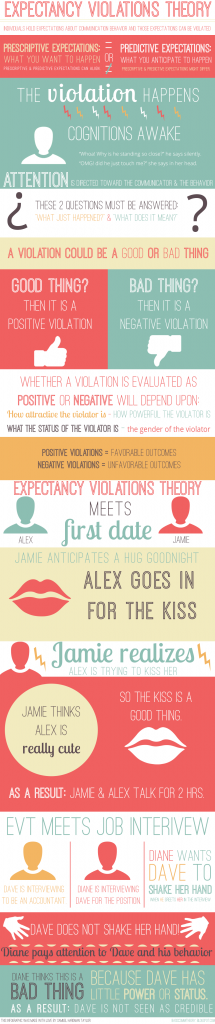 Afifi, W. A., & Metts, S. (1998). Characteristics and consequences of expectancy violations in close relationships. Journal of Social and Personal Relationships, 15, 365-392. doi: 10.1177/0265407598153004
Burgoon, J. K. (1978). A communication model of personal space violations: explication and an initial test. Human Communication Research, 4, 129-142. doi: 10.1111/j.1468-2958.1978.tb00603.x
Burgoon, J. K., & Hale, J. L. (1988). Nonverbal expectancy violations: Model elaboration and applications to immediacy behaviors. Communication Monographs, 55, 58-79. doi:10.1080/03637758809376158
Burgoon, J. K., & Walther, J. B. (1990). Nonverbal expectancies and the evaluative consequences of violations. Human Research Communication, 17, 232-265. doi: 10.1111/j.1468-2958.1990.tb00232.x
Afifi, W. A., & Metts, S. (1998). Characteristics and consequences of expectancy violations in close relationships. Journal of Social and Personal Relationships, 15, 365-392. doi: 10.1177/0265407598153004
Burgoon, J. K. (1978). A communication model of personal space violations: explication and an initial test. Human Communication Research, 4, 129-142. doi: 10.1111/j.1468-2958.1978.tb00603.x
Burgoon, J. K., & Hale, J. L. (1988). Nonverbal expectancy violations: Model elaboration and applications to immediacy behaviors. Communication Monographs, 55, 58-79. doi:10.1080/03637758809376158
Burgoon, J. K., & Walther, J. B. (1990). Nonverbal expectancies and the evaluative consequences of violations. Human Research Communication, 17, 232-265. doi: 10.1111/j.1468-2958.1990.tb00232.x


